Article: The Watches That Timed America's Railroads
The Watches That Timed America's Railroads
Long before the wristwatch, the most consequential watch in America rode in a locomotive cab. A train running on a single track line had no room for approximate time. Opposing trains used the same rails, separated only by a timetable, and the timetable only worked if every engineer, conductor and dispatcher was reading the same minutes. That pressure turned the pocket watch into safety equipment, and it made one Illinois factory, the Elgin National Watch Company, part of the machinery of American rail travel.
When every town kept its own time
For much of the nineteenth century, time was local. Each town set its clocks by the sun, and each railroad generally ran to the time of its headquarters or main terminus. A traveller crossing the country could meet dozens of different local times in a single journey, and station clocks a few miles apart might disagree by several minutes. On lightly built single track lines, where trains passed each other at scheduled sidings, those minutes were not a curiosity. They were the margin the whole system ran on.
The day the railroads reset the clocks
On 18 November 1883, the railroads of the United States and Canada stopped waiting for governments to solve the problem. Working through their General Time Convention, they adopted a system of standard time zones and reset station clocks across the continent at noon. In cities whose local time ran ahead of the new standard, noon effectively arrived twice, and the day is still remembered as the Day of Two Noons. Congress did not write standard time into federal law until 1918, 35 years later. The railroads had standardised American time out of necessity, and the country followed.
Railroad grade was a standard, not a style
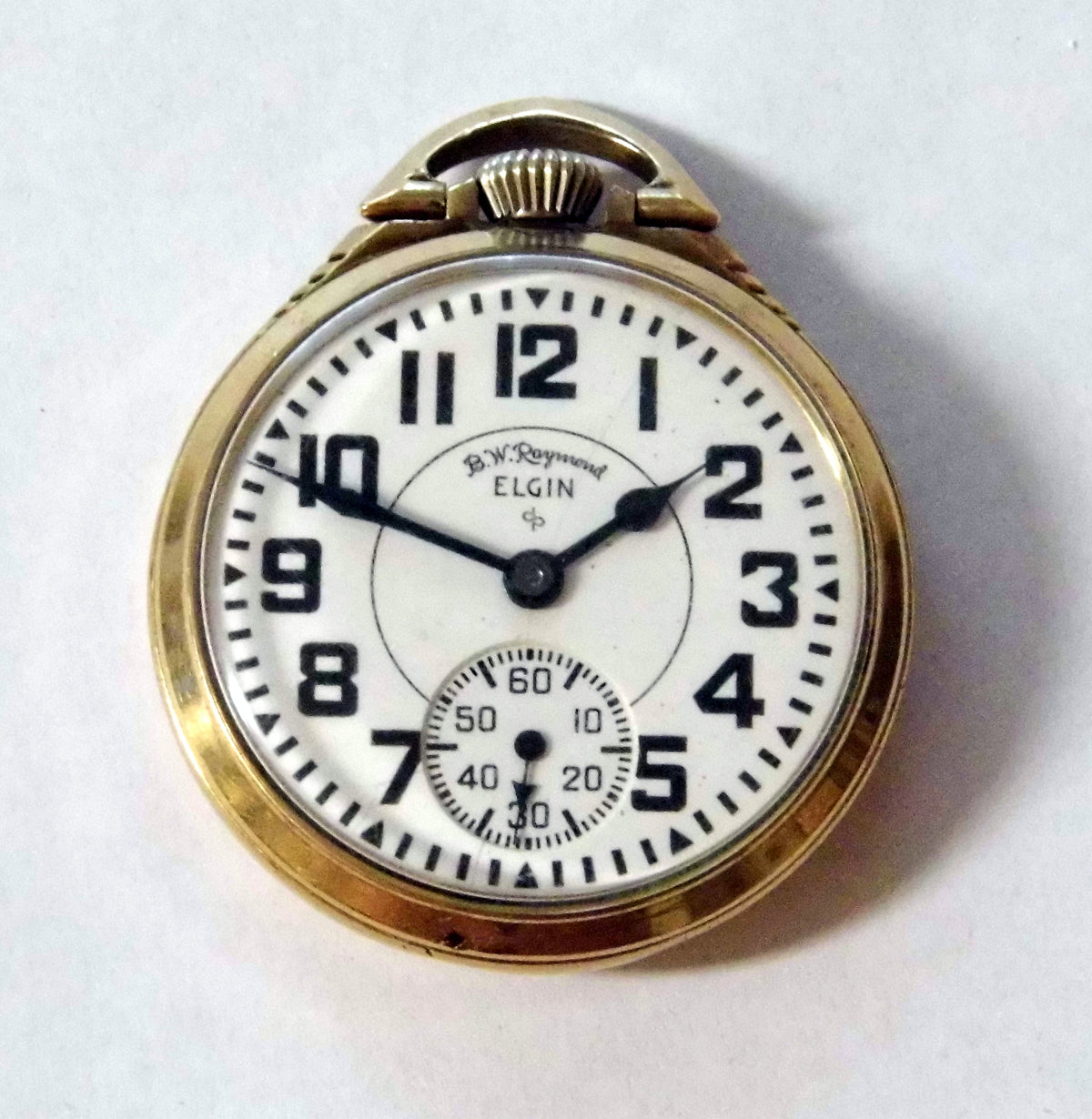
Standard time was only half the answer. The watch in the cab also had to be trusted. After the 1891 collision at Kipton, Ohio, the Lake Shore and Michigan Southern Railway put Cleveland jeweller Webb C. Ball in charge of its time inspection, and Ball's rules, codified in 1893 as the General Railroad Timepiece Standards, defined what a railroad watch had to be. Open faced, in 16 or 18 size. At least 17 jewels. Adjusted to at least five positions, and to temperatures from 34 to 100 degrees Fahrenheit. Accurate to within 30 seconds a week. Lever set, so the time could not be disturbed while winding. Bold black Arabic numerals on a white dial, readable at a glance in a moving cab. Watches were inspected on a regular cycle, and a maker's railroad grade still had to win approval line by line, because each railroad adopted the standards for itself.
Elgin was there from the first movement
Elgin's railroad story begins with its very first product. The company, founded in Chicago in 1864 as the National Watch Company, completed its Elgin factory in 1866, and in April 1867 it finished its first movement: an 18 size, 15 jewel, key wound watch adjusted to temperature. It carried the name B.W. Raymond, after Benjamin W. Raymond, the company's president and a former mayor of Chicago. Some of those first year movements were made for service on the Pennsylvania Railroad, whose general superintendent praised the Raymond movements in 1870 as excellent and very reliable timekeepers. The B.W. Raymond name stayed at the head of Elgin's railroad range for the rest of the company's life, joined by grades such as Veritas and Father Time, and it was still there in 1960, on the grade 730A B.W. Raymond, the first American made wristwatch qualified for railroad service.
Why it still matters
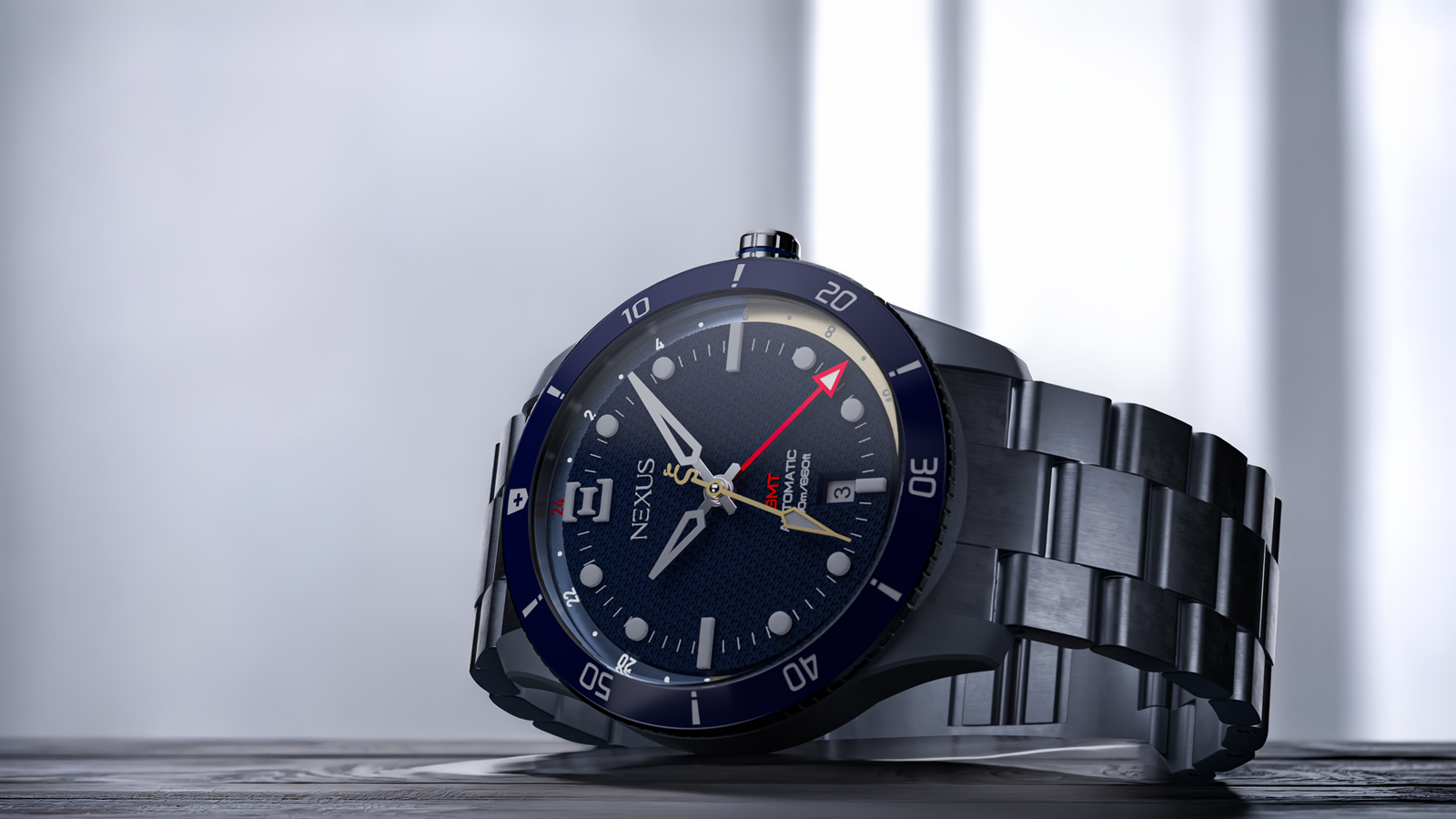
The railroad watch left two habits behind. The first is the time zone itself: the map of hours you cross on a flight today exists because the railroads needed one first. The second is a standard of watchmaking where legibility and accuracy are not styling choices but the whole point of the instrument. That is the tradition the Revival Edition is built in, and it is also why we chose a true GMT movement for it: a century and a half after Elgin's watches helped teach America to think in time zones, the GMT is the personal version of the same idea. The fuller story of the company itself is in What Happened to the Elgin National Watch Company?
Nexus Elgin is a new company, not the original Elgin National Watch Company. We are based in its home city, and our aim is a modest one: to help revive watchmaking in Elgin, Illinois, in our own small way.
Coming 2027. Built properly, or not at all.
Photograph: Joe Haupt, via Wikimedia Commons, CC BY-SA 2.0.