Article: A Brief History of American Watchmaking: Rise, Fall, and the Microbrand Rebirth
A Brief History of American Watchmaking: Rise, Fall, and the Microbrand Rebirth
For roughly a century, the center of the watch world was not Switzerland. It was a string of factory towns in Massachusetts, Illinois, Pennsylvania and Ohio, and the watches those factories made set the standard the rest of the world measured itself against. This is how that industry rose, why it disappeared, and why small American brands are building watches again.
The American system
Watchmaking was a craft trade until American factories industrialized it. In the 1850s, the company that became Waltham, in Massachusetts, applied the manufacturing methods of the armories to the watch: precision machine tools, gauges, and parts made accurately enough to be interchangeable. A broken part could be replaced from stock rather than remade by hand, and output rose from individual pieces to thousands.
That approach, which the world came to call the American system of manufacture, changed what a watch was. Accuracy stopped being a luxury. A well made American movement could be produced in volume, sold at a working person's price, serviced anywhere, and trusted to keep time.
The giants
The industry that followed was built at a scale nobody had attempted before.
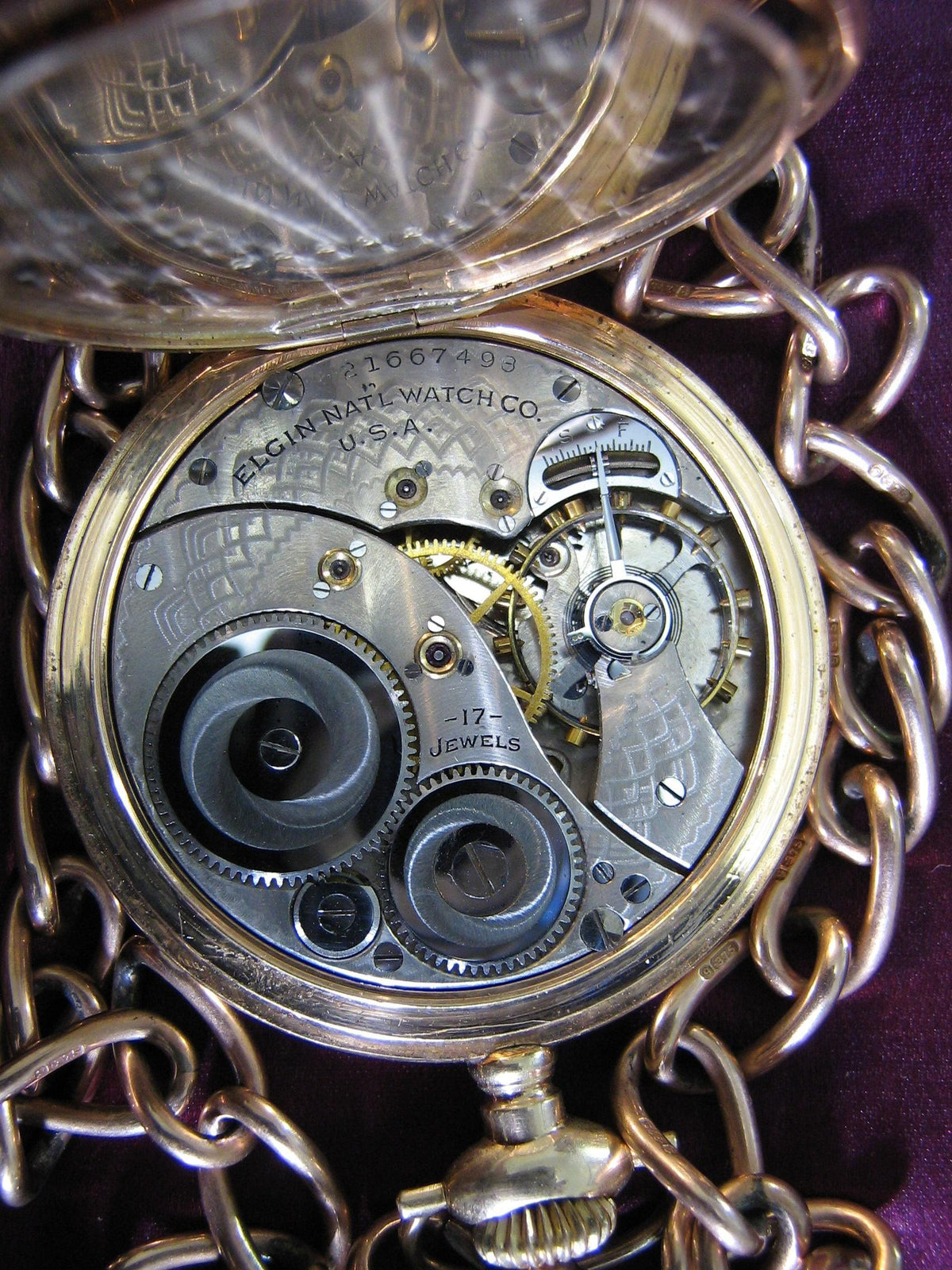
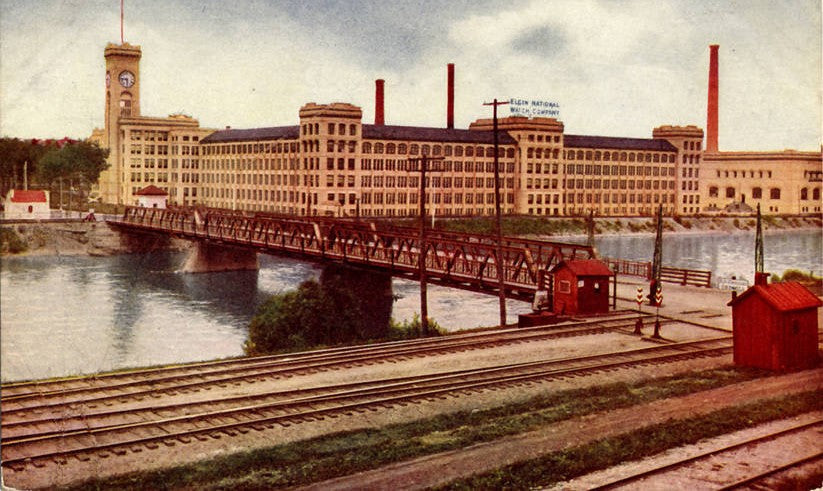
The National Watch Company, soon renamed for its home city of Elgin, Illinois, delivered its first movement in 1867 and grew into the largest watch factory on earth, a complex so complete it eventually generated its own power, printed its own dials and, from 1910, ran its own observatory to regulate against the stars. Hamilton, founded in Lancaster, Pennsylvania in 1892, built its name on precision. The Illinois Watch Company of Springfield, Hampden, Ingersoll and others filled out an industry that employed tens of thousands.
These factories did not just sell watches. They organized time itself. When the railroads standardized time zones in 1883 and adopted strict timepiece standards after 1893, it was American railroad grade movements, Elgin's B.W. Raymond and Veritas among them, that inspectors carried and conductors were judged by. By the early twentieth century the United States was the world's largest watch producer, and Elgin alone passed 55 million numbered movements by 1956.
The turn
The same industry that mastered the pocket watch was slow to leave it. Wristwatches, popularized by soldiers in the First World War, were treated by many American makers as a smaller, lesser product, while Swiss manufacturers committed to them fully.
The Depression broke the industry's back. Demand collapsed, factories merged or closed, and in 1930 the Hampden Watch Company's equipment was sold to the Soviet Union, where it seeded the First Moscow Watch Factory. An industry that had taught the world to build watches was now exporting the means to build them.
War, then the long decline
The Second World War gave the factories one last great task. Production turned to the military: wristwatches for servicemen, clocks for aircraft, and Hamilton's marine chronometers, which navigated the United States Navy. When peace came, the factories returned to a civilian market that was already changing underneath them.
Swiss imports, cheaper to make and increasingly well marketed, took the American market piece by piece. The closures came in sequence. Waltham ended American production in 1957. Elgin made its last American movement in 1968 and the great factory complex was demolished. Hamilton's Lancaster production ended in 1969, and the name continued under Swiss ownership. Quartz movements in the 1970s finished what imports had started, undercutting every mechanical maker at once.
What survived was mostly names. Famous American brands persisted on the dials of watches made elsewhere, and one volume maker, Timex, endured by moving its own production offshore. The factory towns kept the buildings that survived, the observatory domes and the street names, but the trade itself was gone.
The microbrand rebirth
The revival, when it came, did not arrive through the old companies. It came through the internet.
From the 2000s onward, and accelerating with crowdfunding in the 2010s, small independent brands found they could design a watch, fund it directly from customers, and manufacture in small runs without a factory of their own. Most of the early microbrands were American in design and administration only, with production in Asia or Switzerland. But a smaller number set out to rebuild actual American capacity.
RGM, in Mount Joy, Pennsylvania, has made watches since 1992 and builds its own in-house calibers, including traditional engine turning by hand. Weiss Watch Company machines and finishes its movements in Los Angeles. Vortic, in Colorado, gives surviving American pocket watch movements a second life inside wristwatch cases. Shinola's Detroit assembly operation, whatever the arguments about how its watches were described, put watchmaking jobs back into an American factory city and forced an honest national conversation about what "American made" should mean on a watch.
That honesty matters. Almost no modern watch is made in one country, and the credible American brands say where their movements, cases and assembly actually happen. The rebirth is real, but it is a workshop rebirth, not a factory one: hundreds of watches where the old giants made millions.
Where we fit
Nexus Elgin is part of that second wave, and a small part. We are a new company, not the original Elgin National Watch Company. We are based in its home city, and our aim is a modest one: to help revive watchmaking in Elgin, Illinois, in our own small way. Our first watch, the Revival GMT, arrives in 2027, and our longer term plan runs from overseas production toward assembly in Elgin itself.
The old industry proved Americans could build the world's watches. The task for this generation of small brands is narrower and, in its own way, harder: to build good ones again, honestly labeled, at a scale the market will actually support. If that project interests you, join the email list and follow the Revival as it comes together.
Photograph: Unknown author, via Wikimedia Commons. Public domain.