The Watch Company That Built a City — And What Happened to It | Nexus Elgin
Some discoveries change everything.
When I was figuring out what to call this brand, I went through a lot of iterations. I wanted a name that meant something real, not invented, not borrowed from somewhere else. I started looking into whether any historic American watch brands still existed, whether there was something worth reviving.
That's when I found Elgin.
I have a personal connection to Elgin, but that's a story for another day. What matters here isn't me. It's what was built there.
What They Built
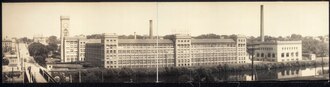
The Elgin National Watch Company was founded in 1864 in Elgin, Illinois. At its peak it was the largest watch manufacturer in the world. Over its lifetime it produced more than 60 million timepieces.
Think about that number for a second. 60 million watches. There are Elgin pieces sitting in antique shops, estate sales, and family collections across every state in America right now. Most people who own one don't even know the story behind it.
The factory employed thousands of Elgin residents across multiple generations. Fathers brought sons into the trade. Skills passed down not just technically but culturally, a sense of what good work actually looks like. What it feels like to make something properly.
This wasn't mass production in the way we think about it today. It was precision at scale. Quality wasn't a claim. It was the standard. The Elgin National Watch Company didn't just make watches, it gave a city its identity. For nearly a hundred years, if you lived in Elgin, your life was tied to that factory in some way.
How It Ended
By the late 1950s and 1960s, Swiss and Japanese manufacturers were undercutting American producers on price. The industry was changing faster than domestic factories could adapt.
In 1968, after 104 years, the Elgin National Watch Company closed.
Just like that. 104 years of accumulated skill, craft, and community identity, gone. The knowledge that had been passed between generations had nowhere left to go.
That was 58 years ago. Most people under 50 have never heard of it.
Why I Care
What gets me isn't the scale of what was built, though that's extraordinary. It's what was lost when it closed.
Not the machinery. Not the buildings. The people. The workers who were genuinely exceptional at something. The pride of a community that made things the rest of the world depended on.
That kind of pride doesn't just disappear. It goes quiet.
Nexus Elgin exists because I think what those workers represented, precision, craft, work done properly, deserves to mean something again. Not as nostalgia. Not as a branding exercise. As something real, built to a standard the name demands.
The people who spent their lives in that factory deserved better than to be forgotten. The city they built deserves to have that legacy mean something again.
That's what we're working toward.
The revival begins July 28.